What Are Pre-Engineered Metal Buildings and When Do They Make Sense for a Commercial Project
How a PEMB Differs from Conventional Structural Steel
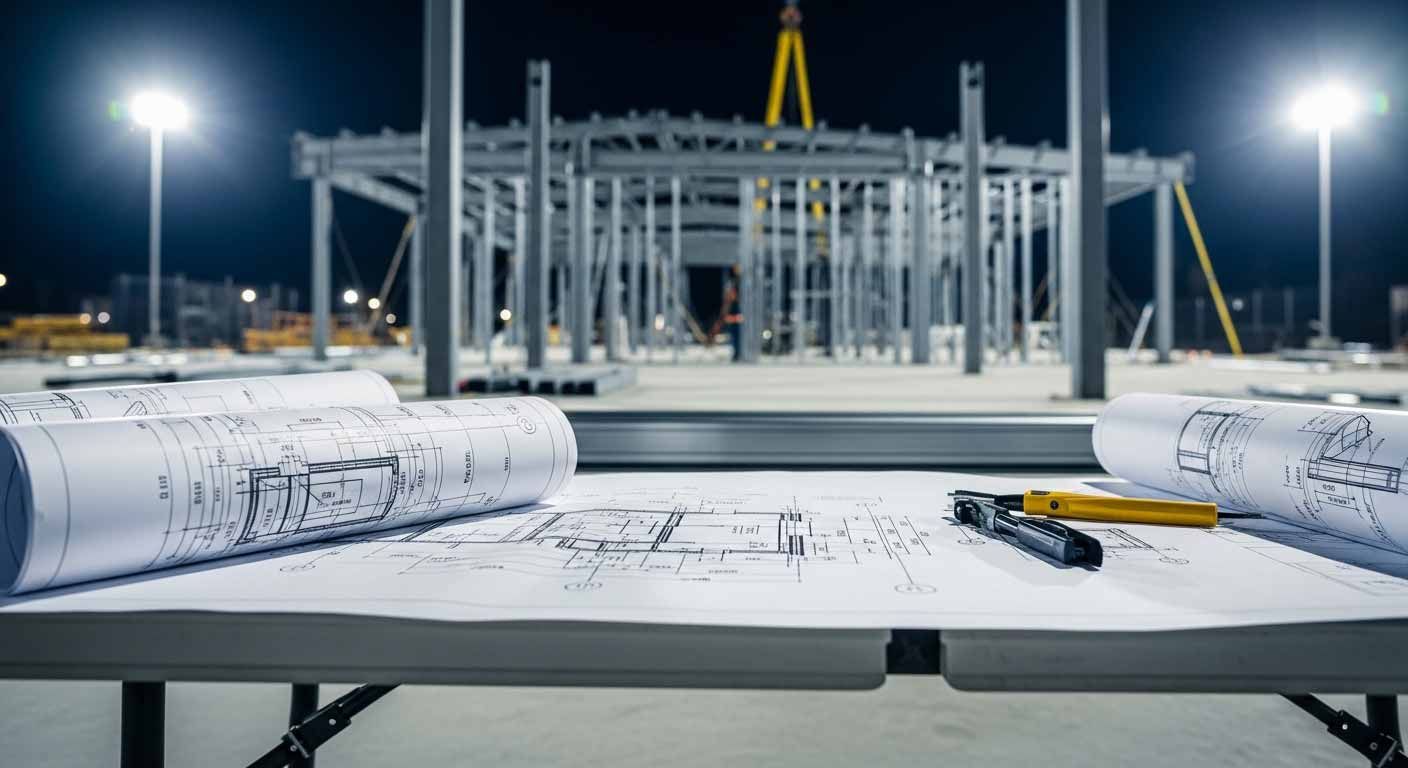
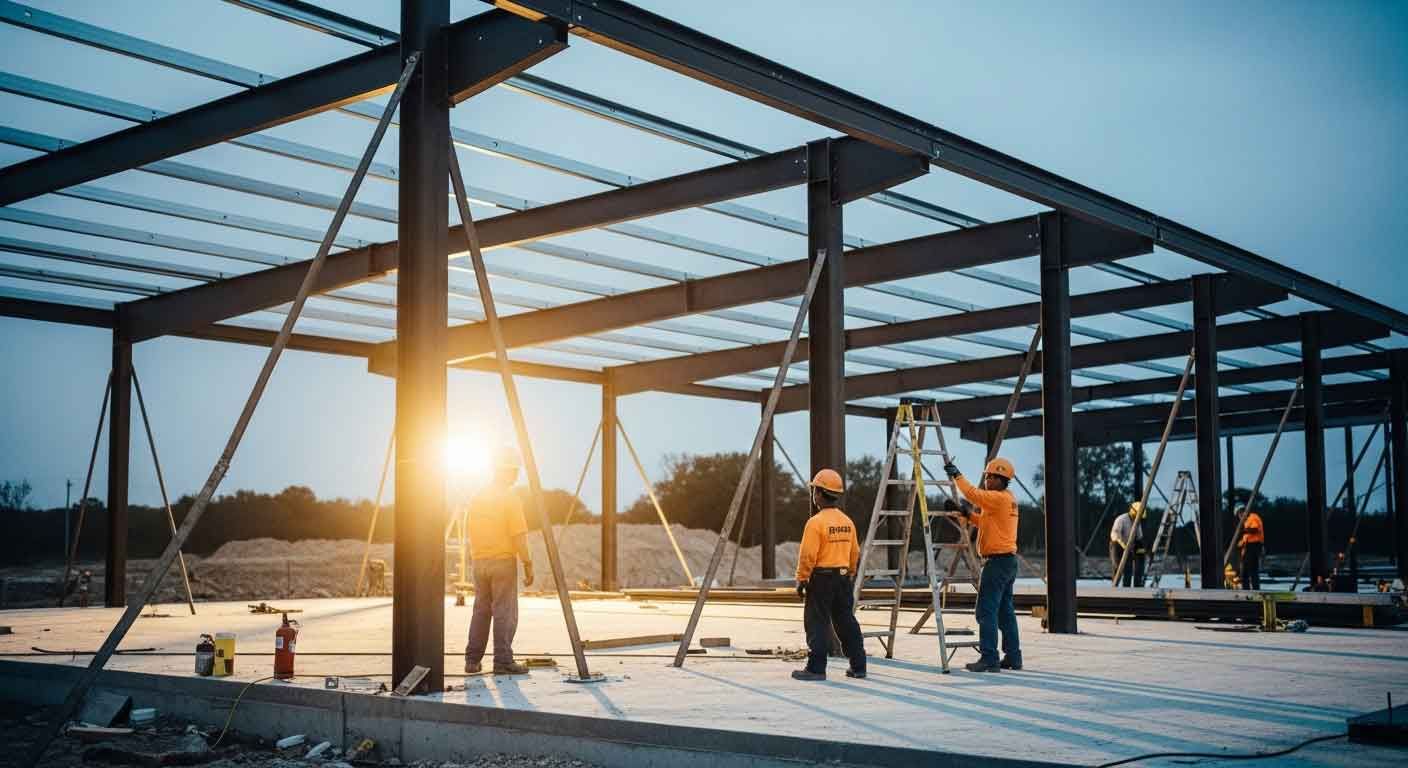
A pre-engineered metal building starts with a manufacturer who is also the engineer of record for the primary structure. They design the building system, optimize member sizes using computer-aided engineering, fabricate every component in a factory, and ship everything to the job site as a numbered, ready-to-assemble package. Primary rigid frames, purlins, girts, roof and wall panels, trim, and hardware all arrive together and bolt up according to the manufacturer's erection drawings.
Conventional structural steel fabrication works differently. A structural engineer of record designs the framing system to meet project-specific loads and geometry. A certified fabricator then sources the steel, cuts and fits the members, and welds them to specification. The fabricator and engineer are separate parties. The steel is custom-built for that building, not adapted from a standardized system.
The practical difference matters to GCs because it changes who is responsible for what. On a PEMB, the manufacturer owns the structural design of everything above the base plate. On conventional steel, that responsibility stays with the project's structural engineer. Both systems are well-proven, but they allocate design responsibility and risk differently.
Where PEMBs Make Sense in Houston Commercial Construction
PEMBs work best for buildings with simple rectangular or repetitive footprints and predictable load requirements. In Houston's commercial market, they show up regularly in warehouse and distribution facilities, auto dealerships, light industrial and flex space, and some categories of strip retail. Projects where the geometry is clean and the owner does not need highly customized architectural expression are natural candidates.
They become a poor fit for projects with complex geometry, multi-story requirements, very large spans, or tight site constraints that make crane logistics difficult. On any project mixing tilt wall panels with a PEMB primary structure, coordination demands increase considerably.
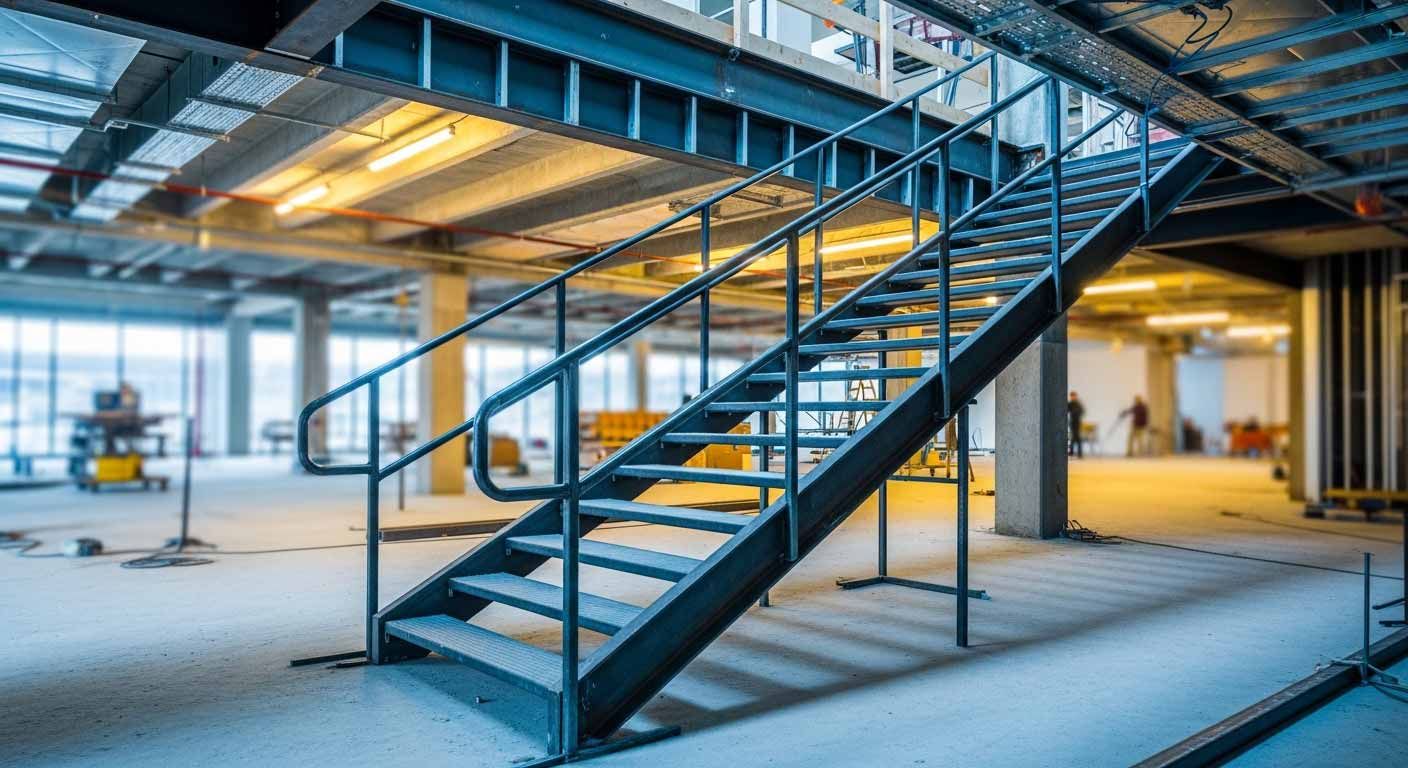
One thing GCs sometimes discover after committing to a PEMB scope: the manufacturer's package covers the primary structure, but a significant portion of the building's metal scope falls outside it. Miscellaneous metal work, including interior stairs, guardrails, handrails, canopies, and custom framing around openings, almost always requires a separate fabrication scope. Commercial steel stairs in particular need to be coordinated alongside the PEMB erection schedule, not treated as an add-on after the building is up.
The Fabricator and Erector Roles on a PEMB Project
Because the PEMB manufacturer handles fabrication of the primary structure, the steel contractor's role shifts to erection and to the scope outside the package.
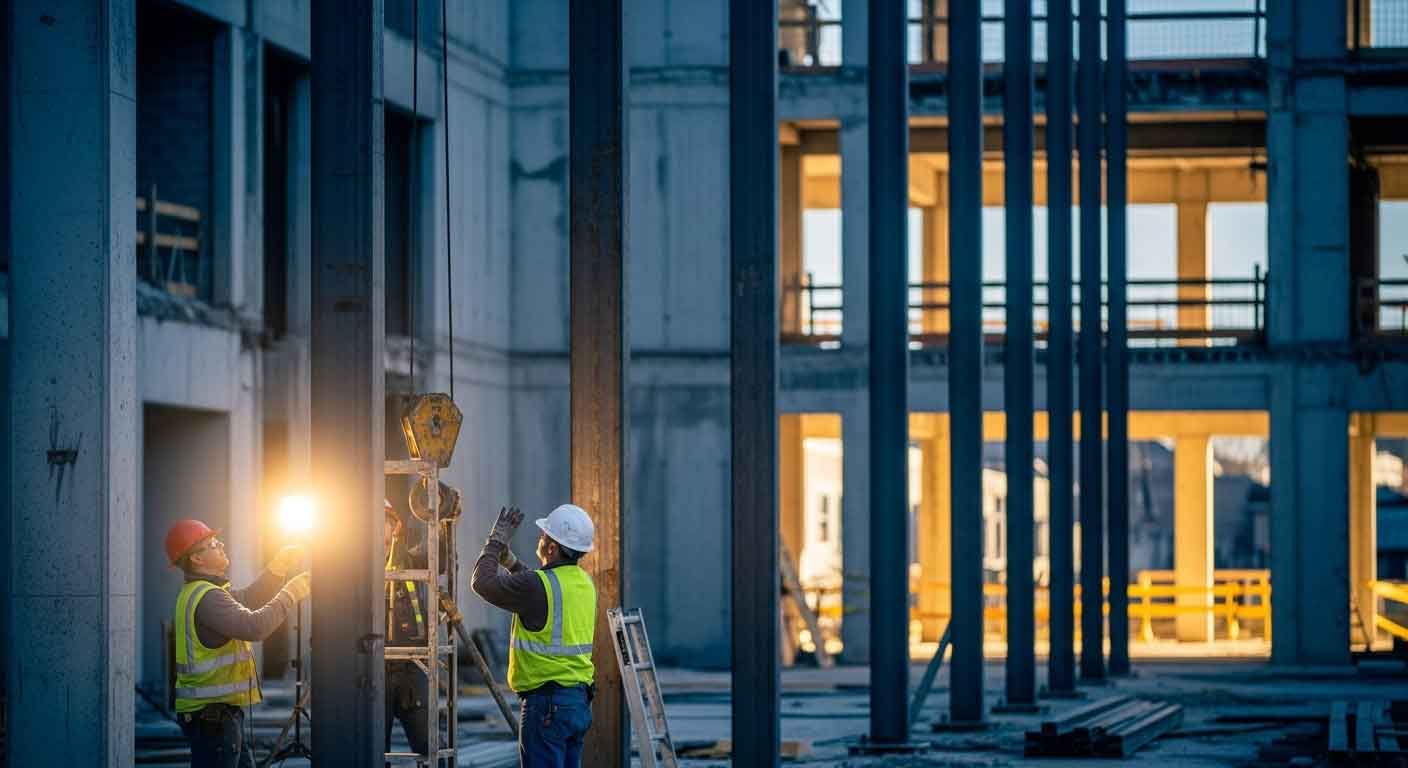
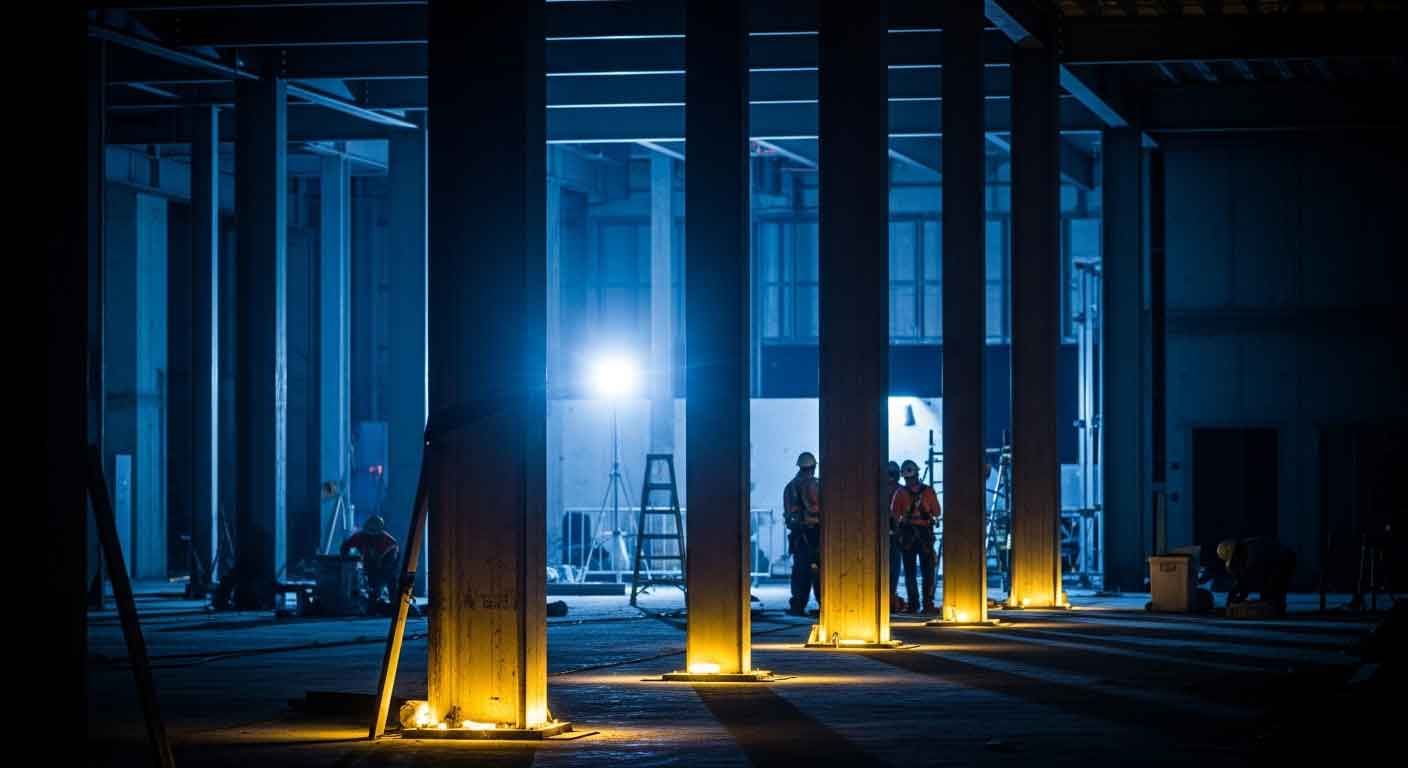
Experienced PEMB erectors bring familiarity with bolt-up sequences, rigging requirements, and the plumb-and-square tolerances the manufacturer's system depends on. Crews without PEMB erection experience can create warranty and alignment problems that are difficult to resolve after the frame is up.
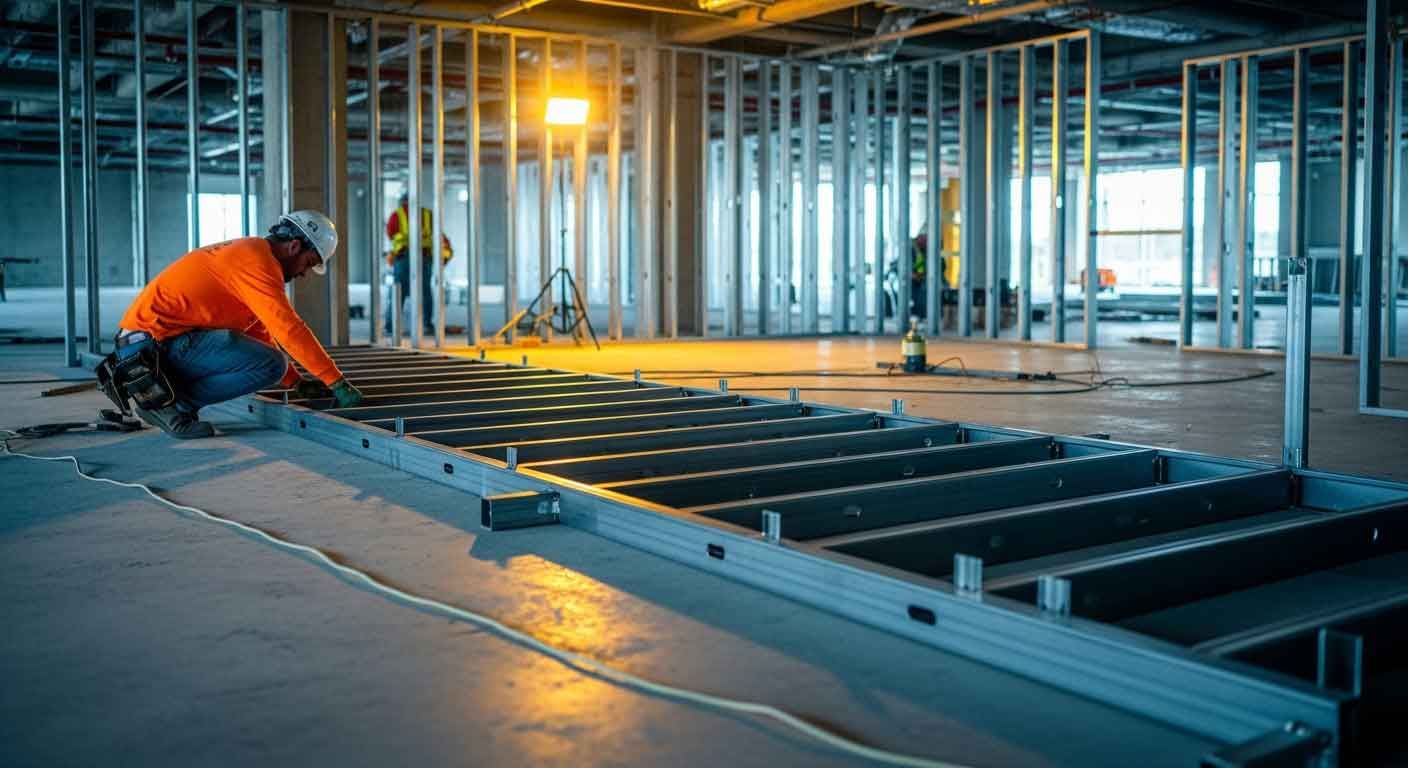
Beyond erection, the steel contractor typically handles custom fabrication of items not included in the manufacturer's package. That is where shop drawings, miscellaneous metals fabrication, and coordination between the erection schedule and the remaining steel scope come into play. Getting those two scopes clearly defined before the project starts is where most PEMB projects either run well or develop coordination problems.
We handle both PEMB erection and fabrication of items outside the manufacturer's package. What we've found is that projects go better when those scopes are managed under a single contract rather than split between multiple subcontractors.
What GCs Should Clarify with Their Steel Sub Before Committing to a PEMB Scope
Before the package is ordered and the steel scope is awarded, a few things are worth getting on paper:
- Foundation responsibility. The PEMB manufacturer provides base plate loads and anchor bolt plans. Foundation design stays with the project's structural engineer. Confirm those two parties have exchanged information before anything goes to concrete.
- What is and is not in the package. Read the manufacturer's scope carefully. Doors, windows, and special openings may or may not be included depending on the manufacturer and the project specifications.
- Lead time. PEMB packages typically run 8 to 16 weeks from order to delivery. That window is fixed and needs to be on the master schedule before the GC commits to a completion date.
- Erection experience. Ask specifically about PEMB erection experience, not just general structural steel experience. They are related but not the same thing.
- Miscellaneous metals coordination. Clarify who fabricates and installs stairs, railings, and other items outside the package, and how that scope is scheduled against the erection timeline.
Before You Put a PEMB on the Schedule
Decisions about whether to use a PEMB or conventional structural steel often happen before a steel subcontractor is involved. If that decision is still in play, a conversation with an experienced local steel contractor can help clarify whether the building system fits the project scope or whether a different approach makes more sense for the geometry, the budget, and the schedule.
A.G. Welding is a City of Houston certified structural steel fabricator with nearly 40 years of commercial ironwork experience in the Houston area. We work on PEMB projects as erectors and as the fabricator of scope outside the manufacturer's package.
Contact A.G. Welding to discuss your next commercial steel scope by requesting a free estimate or calling us at (713) 988-4200.